
All things fascia: What is it? What does it do? And what can you do to pay attention to it and get its benefits?

All things fascia: What is it? What does it do? And what can you do to pay attention to it and get its benefits?
I’m sure I speak for most people when I say a lot of us are probably unaware of what fascia is or that we even have it throughout our own bodies. Others may have heard of fascia or know little about it but perhaps don’t realise just how important it is to the way our bodies move and function.
And that’s okay because I’m here to talk to you on all things fascia! Starting with the big question: what actually is it?
What is fascia, what does it do and why is it so important?
Fascia is a connective tissue network that runs throughout our entire body, surround and connecting our muscles, bones, joints, nerves, blood vessels and organs. Think of it as a continuous web that helps support and connect different structures, allowing our bodies to work together as one interconnected system.
From the soles of our feet all the way to around our skulls, fascia is everywhere. A good way to picture it is to imagine it as a fully body strip of Velcro, connecting the different structures together.
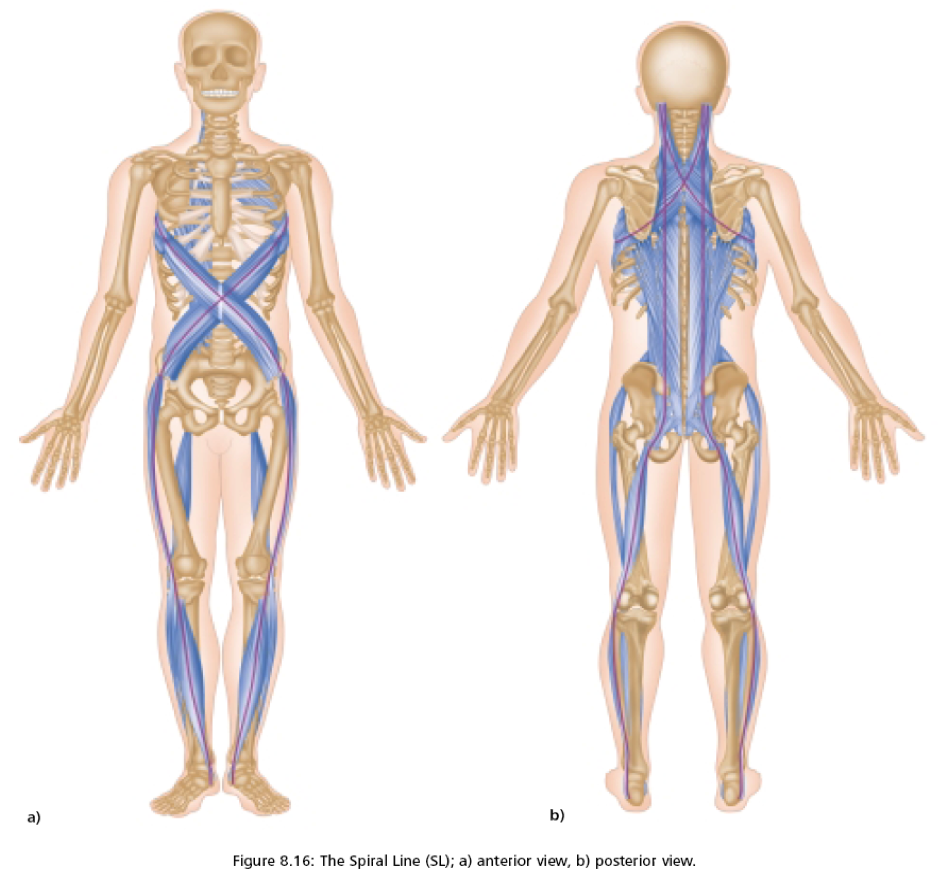
The blue structure represents the type of fascia that connects all of our body’s parts together.
It is a fibrous web like structure made from collagen and elastin elements and is incredibly adaptive but like any other part of the body it can undergo changes, some beneficial and some not so much. Now when fascia isn’t treated or cared for properly or doesn’t have what it needs the fascial tissue will become incredibly sticky becoming less mobile as its ability to glide smoothly alongside surrounding structures is affected. Ultimately influencing how comfortably and efficiently we move.
Think of it kind of like when you’re doing DIY and get superglue on your hands. Before you know it, you’ve got your fingers stuck together unable to move freely as you want and need it to. And this restriction in tissue movement affects our whole bodies as one part of the body directly impacts another.
When the fascial tissue becomes less mobile and smoothly gliding this can contribute to many varying issues like stiffness, restrictive movement, reduced flexibility, discomfort. In some cases, it can contribute to postural asymmetries, facial asymmetries and even persistent pain.
The body is an interconnected system as previously stated, with different muscles, joints and connective tissue working together to create movement. Because of this, a change in one area can very often influence how another area functions too. For example, if we begin to experience reduce mobility around the hips, we may begin to change how we move which can then change how we move through the pelvis and lower back. When this is done for extended periods of tie this can influence how we position our upper body potentially reading to postural changes such as rounded shoulders.
This is why it’s important to look at the body as a whole rather than focusing just solely on the joint that you think is the issue. Sometimes, the area where we feel discomfort isn’t necessarily the only area contributing to the issue its things around it too and that’s where you turn you focus to caring for your fascia.
How to help care for your fascia and keep it healthy?
How will I know if my fascia is healthy if I can’t see it? you may ask… well you will feel it. Whilst we can’t see our fascia, we can pay attention to how we feel and move. You will feel less stiff, less pain, more mobile, more flexible, better posture.
There are many things you can do to care for your fascia but at the core of it caring for your fascia means keeping our bodies hydrated, moving regularly and allowing our tissue to adapt to the damns we place on them.
Hydration and nutrition:
Our connective tissue contains water, which plays an important role in their structure and function. Staying hydrated supports and keeps out tissue hydrated too.
A general guide of drinking 2 litres of water per day remembering to drink more on hot days or when working out. Alongside hydration, eating a balanced, nutrient rich diet is important including fruits, vegetables, whole grains, protein sources, healthy fats and even herbal teas as these have vitamins and minerals that will help our bodies repair and maintain these tissues to good quality.
Movement: Giving your body what it needs.
Now let’s talk about movement! As fascia runs throughout the whole body, there are so many ways we can encourage healthy movement and support our connective tissues. you can do to help keep your fascia healthy and cared for. There are so many options as the fascia covers the whole body so let me list them for you.
- Stretching, yoga and pilates- Encouraging mobility, flexibility, body awareness and controlled movement.
- Strength training- Helping our muscles and connective tissue adapt to the loads we place on them.
- Walking and regular movement breaks– Particularly useful for those who work at a desk or sit in one position for long periods of time.
- Foam rolling and massage– These can temporarily help improve sensations of stiffness, reduce discomfort and increase range of motion.
- Foot mobility and rolling– Using a massage ball or gently rolling the soles of the feet may help relive tension in the body.
- Breath work and gentle movement practices– Practices such as yoga or Qigong, can encourage relaxation, body awareness and movement that is comfortable.
- Running or sprinting– Good for providing another way to load the body and challenge the tissue with demands
The key to using movement to aid fascia is to have some variety as out bodies benefit from different types of movement. Different parts of the body may require a different way of help. For example, if your experiencing stiffness around the hips, starting to incorporate relevant mobility exercises, stretching or massage may help you to begin moving with more ease over time as you begin working with your fascia.
Final thoughts-
Fascia is a fascinating part of our bodies, and the more we understand it the more we can appreciate how interconnected our body really is.
Looking after your fascia does not need to be complicated. Regular movement, strength training, mobility work, hydration and recovery all play a role in supporting our overall health and movement. Whether its trough Pilates, a walk, a stretch session or simply taking a break in your day from sitting, these small things can make a big difference with time on how we feel and move.