Abs Explained: How to Train Them, See Them and The Benefits of a Strong Core
For many gym-goers, developing visible abs is one of the most sought-after fitness goals. Social media is filled with ab workouts promising a six-pack in just a few weeks, leading many people to believe that endless crunches are the secret to a defined midsection.
The reality is far more nuanced. Visible abs are influenced by both muscle development and body fat levels, and simply doing more ab exercises isn’t enough. At the same time, the benefits of training your core go far beyond aesthetics. A strong core can improve posture, support overall health, reduce injury risk, and help you perform better on major lifts such as squats and deadlifts.
In this article, we’ll cover everything you need to know about abs, including how to make them visible, how to train them effectively for growth, and why building a strong core should be a priority whether you’re chasing a six-pack or simply looking to improve your overall fitness.
Visible Abs Are More About Body Fat Than Ab Training
One of the biggest misconceptions in fitness is that doing more ab exercises will automatically give you a six-pack.
The truth is that everyone already has abdominal muscles. The reason most people can’t see them is because they’re covered by a layer of body fat.
You can perform thousands of crunches every week, but if your body fat percentage is too high, your abs will remain hidden. Just as you wouldn’t expect to see the shape of your biceps under a thick jacket, you won’t see your abdominal muscles through excess body fat.
While genetics influence where people store fat and how their abs look, visible abdominal definition generally starts to appear around:
- Men: approximately 10-15% body fat
- Women: approximately 18-25% body fat
For a highly defined six-pack, body fat levels often need to be even lower.
This is why nutrition and overall calorie balance are so important. You cannot out-train a poor diet when it comes to revealing your abs. Fat loss comes from maintaining a calorie deficit over time, while resistance training helps preserve muscle mass during the process.
How to Actually Grow Your Ab Muscles
Another mistake people make is treating abs differently from every other muscle group.
If your goal is to build bigger shoulders, you don’t perform endless sets with the same light weight forever. You progressively increase the challenge over time through heavier loads, more repetitions, or greater training volume.
Your abs work exactly the same way.
The rectus abdominis, the muscle responsible for the “six-pack” appearance, responds to progressive overload just like your chest, back, or legs. If you want thicker, more developed abs that stand out when you lean down, you need to train them with resistance.
This is where weighted exercises often outperform traditional bodyweight movements.
Some of the best exercises for building abdominal muscle include:
- Cable crunches
- Machine crunches
- Weighted decline sit-ups
- Weighted hanging knee raises
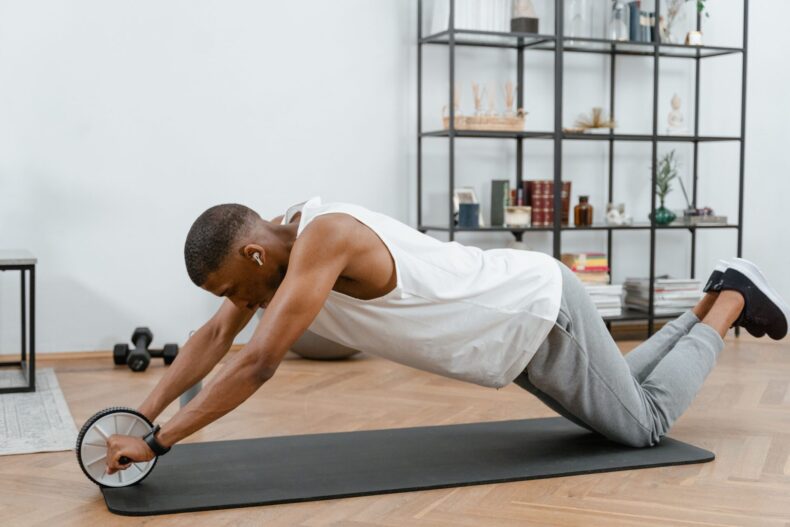
- Ab wheel rollouts
Cable crunches are particularly effective because they allow you to easily increase the resistance over time. Just as you would progressively add weight to a squat or bench press, you can gradually increase the load and continue stimulating muscle growth.
Bodyweight exercises such as standard crunches and sit-ups can still be useful, especially for beginners, but they often become too easy as strength improves. Once you can comfortably perform high repetitions, the growth stimulus becomes limited.
For maximum development, train your abs with the same mindset you use for any other muscle group:
- Focus on progressive overload
- Train close to muscular failure
- Use controlled technique
- Track performance over time
- Allow adequate recovery
Stronger abs are bigger abs, and bigger abs become far more visible when body fat levels are reduced.
Why Core Strength Matters Beyond Aesthetics
Even if your goal isn’t a visible six-pack, developing a strong core provides significant health and performance benefits.
Your core is responsible for stabilising your spine and transferring force between your upper and lower body. Almost every movement you perform throughout the day relies on core strength to some degree.
A stronger core can help:
Improve Posture
Weak core muscles can contribute to poor posture and excessive strain on the lower back. Building core strength helps maintain proper spinal alignment during both exercise and daily activities.
Reduce Injury Risk
A strong core improves stability and control during movement. This can help reduce unnecessary stress on the spine and surrounding joints, potentially lowering the risk of injury during training.
Enhance Athletic Performance
Whether you’re running, jumping, changing direction, or lifting weights, force must travel through your core. The stronger and more stable your midsection is, the more efficiently that force can be transferred.
Improve Your Major Gym Lifts
Many people think of core training as separate from exercises like squats and deadlifts, but the opposite is true.
During heavy compound lifts, your core acts as a stabilising platform. If your core is weak, force leaks occur and performance suffers.
A stronger core can improve:
- Squat stability and bracing
- Deadlift strength and spinal control
- Overhead pressing stability
- Bench press setup and power transfer
- Overall lifting confidence under heavy loads
This is one reason why many elite powerlifters and strength athletes prioritise direct core work despite already performing heavy compound exercises.
The Bottom Line
Visible abs require two things: well-developed abdominal muscles and low enough body fat levels for those muscles to be seen.
No amount of crunches can compensate for excess body fat, which is why nutrition and overall fat loss are essential for revealing a six-pack. At the same time, if you want abs that truly stand out, you need to train them like any other muscle group using progressive overload and resistance-based exercises such as cable crunches.
Beyond aesthetics, a strong core supports better posture, reduces injury risk, improves athletic performance, and helps you get stronger on the exercises that matter most.
Build your abs, reduce body fat, and you’ll not only look stronger, you’ll perform stronger too.